Interior vs Exterior Color Palettes: Key Differences & Design Rules​

Interior vs Exterior Color Palette Rules

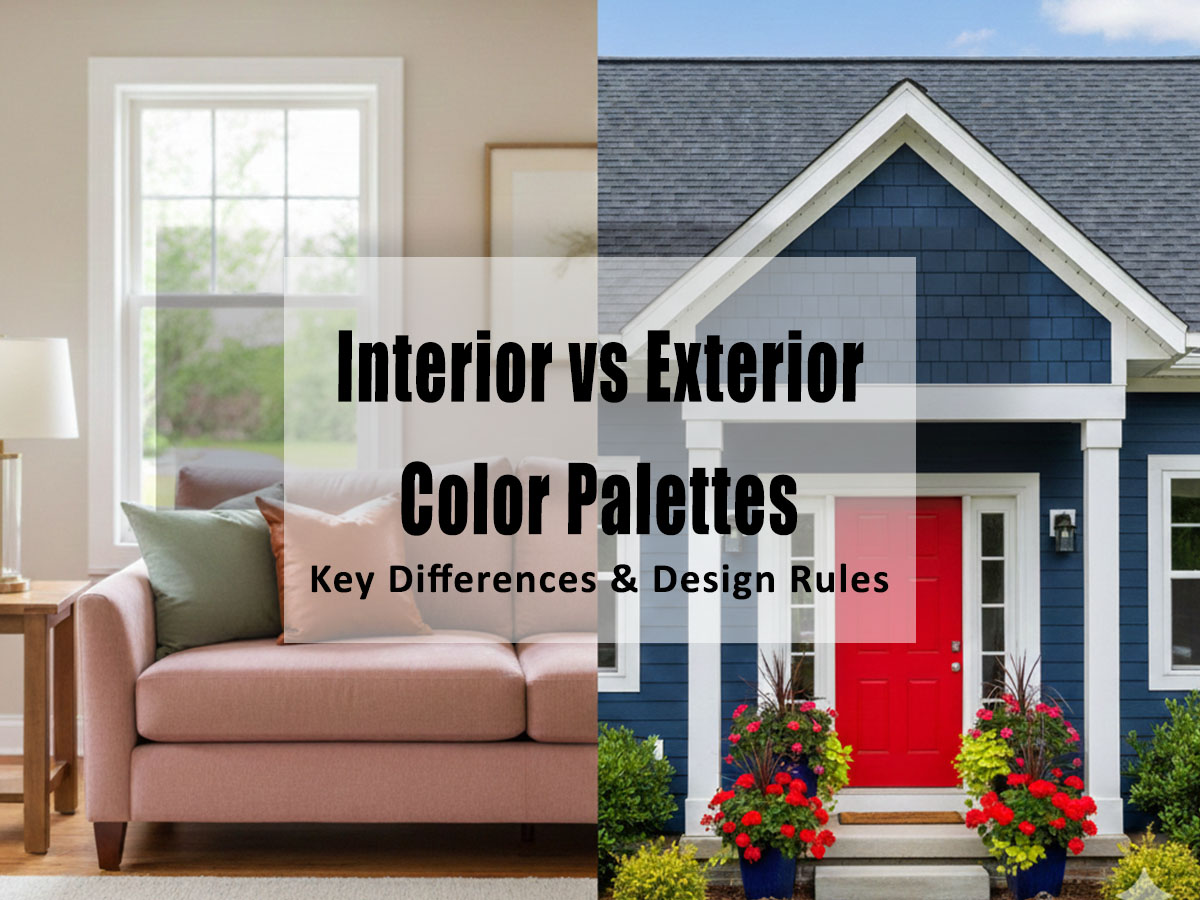
Interior vs Exterior Color Palettes: Key Differences & Design Rules

Choosing colors for a home is not just a visual decision—it is a functional one. Interior and exterior color palettes follow fundamentally different rules because they interact with light, materials, weather, and time in very different ways. Treating them the same is one of the most common design mistakes homeowners and beginners make.

This guide explains why interior and exterior color palettes must be approached differently, covering light behavior, weather exposure, finishes, pigments, and long-term durability. By the end, you will understand how to build palettes that look intentional, realistic, and long-lasting.

Interior vs Exterior Color Palettes: The Core Difference

At a high level:

  • Interior color palettes are designed for controlled environments

  • Exterior color palettes must survive uncontrolled environments

Interiors deal with artificial lighting, predictable shadows, and human comfort. Exteriors deal with sunlight, rain, pollution, fading, and architectural context.

This single distinction affects every design rule discussed below.

Why Logo Color Choice Matters More Than You Think

Your logo colors are often the first visual signal users receive about your brand. Before reading a word, people subconsciously judge:

  • Professionalism

  • Trustworthiness

  • Industry relevance

  • Emotional tone

Poor logo color combinations can:

  • Reduce legibility

  • Look unprofessional at small sizes

  • Fail accessibility checks

  • Break when placed on different backgrounds

Good logo color schemes do the opposite — they scale, adapt, and remain recognizable everywhere.

Looking for Actual Color Palettes?

This article focuses only on design rules and decision-making principles. If you are looking for real-world color palette examples, previews, and ready-to-use combinations, explore the following guides:

You can also experiment with combinations yourself using the Color Palette Generator and Builder, which lets you create harmonious palettes before applying them to interior or exterior spaces.

1. Light Behavior: How Colors React Indoors vs Outdoors

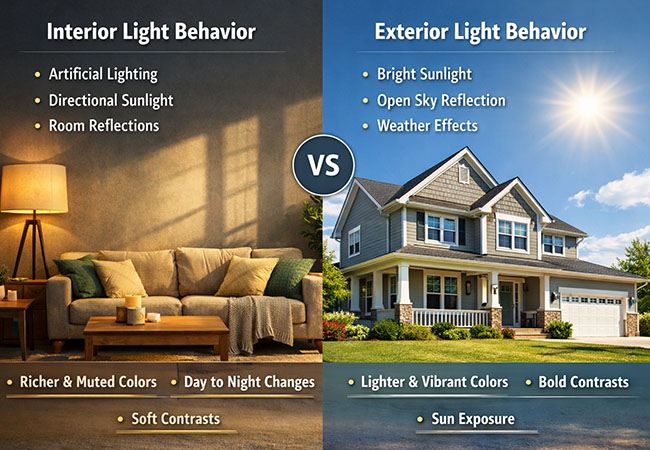
Interior Light Behavior

Interior colors are influenced by:
  • Directional natural light (north-, south-, east-, west-facing rooms)
  • Artificial lighting (warm, neutral, or cool bulbs)
  • Reflections from floors, ceilings, and furniture
Because interior light is limited and indirect, colors:
  • Appear darker and richer than expected
  • Change significantly between day and night
  • Can feel overwhelming if too saturated
This is why interior palettes often rely on:
  • Muted tones
  • Balanced neutrals
  • Soft contrasts rather than extremes

Exterior Light Behavior

Exterior colors are exposed to:
  • Direct sunlight
  • Open sky reflection
  • Seasonal sun angle changes
As a result:
  • Colors appear lighter and brighter outdoors
  • Subtle tones may wash out
  • Dark colors absorb heat and show wear faster
Exterior palettes usually require:
  • Slightly deeper or more saturated shades
  • Stronger contrast for architectural clarity
  • Careful testing in full daylight
Design rule: A color that looks perfect indoors may look completely different once exposed to outdoor light.
Light Behavior in Interior and Exterior Color Palettes

2. Weather Impact: A Rule That Applies Only to Exteriors

Weather is irrelevant indoors—but it defines exterior color selection.

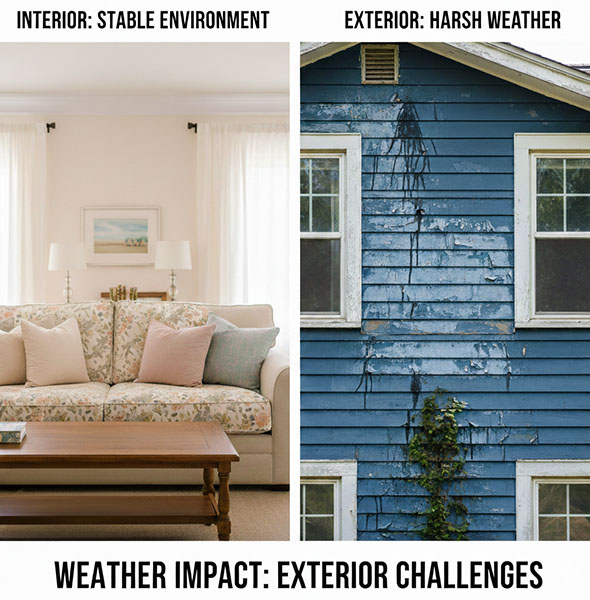
Exterior Weather Factors

Exterior colors must withstand:
  • UV radiation (causes fading)
  • Rain and humidity (causes staining and discoloration)
  • Dust, pollution, and organic growth
  • Temperature expansion and contraction
Because of this, exterior palettes should:
  • Avoid extremely dark or extremely bright tones
  • Favor time-tested, stable hues
  • Use contrast carefully to hide aging
Highly trendy or experimental colors often age poorly outdoors.

Interior Environments Are Predictable

Interior palettes do not face weather stress. This allows:
  • Softer color experimentation
  • Seasonal decor changes
  • Trend-driven palettes
However, interior colors must still support comfort and long-term usability, especially in frequently used rooms.
Weather Impact on Interior and Exterior Colors

3. Finish vs Pigment: Why Surface Matters More Than Color Name

Many people choose colors by name alone. This is a mistake—finish and pigment concentration matter just as much as hue.

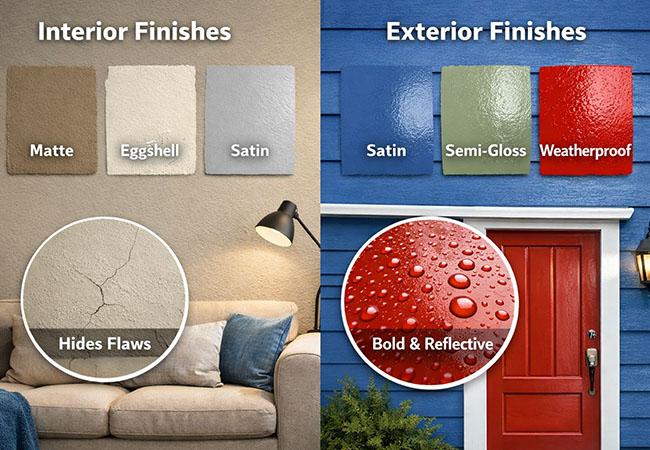
Interior Finishes

Common interior finishes include:
  • Matte / flat
  • Eggshell
  • Satin
These finishes:
  • Reduce glare
  • Soften color perception
  • Hide minor wall imperfections
Interior palettes often rely on finish variation to create depth without changing colors dramatically.

Exterior Finishes

Exterior finishes are typically:
  • Satin
  • Semi-gloss
  • Specialized weather-resistant coatings
These finishes:
  • Reflect more light
  • Make colors appear brighter
  • Improve washability and durability
Design rule: The same pigment will look sharper and more intense outdoors due to higher reflectivity.
Interior vs Exterior Finishes

4. Longevity: Designing for Years, Not Weeks

Longevity is where interior and exterior palettes diverge the most.

Interior Palette Longevity

Interior palettes can change relatively easily. Repainting a room is:
  • Affordable
  • Low-risk
  • Trend-friendly
This allows interiors to:
  • Follow evolving styles
  • Reflect personal taste shifts
  • Experiment with accent colors

Exterior Palette Longevity

Exterior repainting is:
  • Expensive
  • Labor-intensive
  • Infrequent (often 7–15 years)
For this reason, exterior palettes should:
  • Avoid fast-fading trends
  • Complement architectural style
  • Work across seasons and lighting conditions
A good exterior palette looks acceptable even as it subtly fades.

Interior vs Exterior Color Palette Rules (Quick Comparison)

FactorInterior PalettesExterior Palettes
LightControlled, indirectDirect, intense
SaturationMuted, balancedSlightly stronger
FinishMatte to satinSatin to semi-gloss
DurabilityLow concernHigh priority
Trend FlexibilityHighLow

How to Build Interior and Exterior Palettes Correctly

Instead of guessing, use a structured palette approach:

  1. Start with a base neutral

  2. Add supporting mid-tones

  3. Introduce controlled accents

  4. Test under real lighting conditions

A palette-based approach ensures consistency across rooms or elevations.

You can experiment safely using a Color Palette Generator and Builder, which allows you to:

  • Create theme-based palettes

  • Generate random but harmonious combinations

  • Build palettes from HEX values

  • Explore color harmony rules before applying them to real spaces

This step prevents costly mistakes before painting.

Final Thoughts

Interior and exterior color palettes are not interchangeable. Each operates under a unique set of physical and visual constraints. When palettes respect light behavior, environmental exposure, finish selection, and longevity, they look intentional—not accidental.

Treat color as a system, not a swatch. That mindset alone puts you ahead of most homeowners and beginner designers.

FAQs

Can the same color palette be used for both interior and exterior walls?

While the same color family can be used, the exact shades usually should not. Colors appear darker indoors and much brighter outdoors due to sunlight, finishes, and surface reflection.

Why do exterior colors look lighter than interior colors?

Exterior colors are exposed to direct sunlight and sky reflection, which increases brightness and reduces perceived depth compared to controlled indoor lighting.

Do finishes affect how colors look indoors and outdoors?

Yes. Matte finishes soften interior colors, while satin or semi-gloss finishes used outdoors reflect more light, making colors appear sharper and brighter.

How long should an exterior color palette last compared to an interior one?

Interior palettes can change every few years, but exterior palettes should be designed to last 7–15 years due to repainting cost, weather exposure, and fading.

Is it better to plan color palettes before choosing paint shades?

Yes. Building a palette first ensures harmony across spaces and surfaces. Tools like a color palette generator help test combinations before applying paint.

Leave a Reply

Shopping cart

0
image/svg+xml

No products in the cart.

Continue Shopping
TOC