Reasons Why People Are Quietly Quitting YNAB
There is a specific kind of frustration that builds slowly.
You sign up for a budgeting app because you want to save money. You enter your bank details. You set up your categories. You spend two hours learning a system that has its own terminology, its own philosophy, its own learning curve.
And then the monthly charge hits.
$14.99. To manage the money you are trying to save.
That is the quiet contradiction sitting at the center of every subscription budgeting app — and it is why a growing number of people are walking away from YNAB specifically, not because it does not work, but because the model itself feels fundamentally backwards.
The YNAB Problem Is Not the App
To be fair — YNAB is genuinely well designed. The zero-based budgeting methodology is solid. The interface is clean. The educational content is good.
The problem is not the product. The problem is the pricing model applied to a personal finance tool.
When you are trying to build an emergency fund, pay off debt, and cut unnecessary subscriptions — a $14.99 monthly budgeting subscription is one of the first things that starts to feel contradictory. You are paying for the privilege of being told you are spending too much.
Reddit’s r/YNAB and r/personalfinance are full of variations of the same post — “is YNAB worth it?” The answers are always split. Half say yes, the methodology changed their life. Half say they cancelled after realising a spreadsheet does the same thing for free.
Both groups are right. Which tells you the real issue is not functionality — it is ownership.
The Ownership Problem With Subscription Finance Apps
Subscription apps have a structural problem that goes beyond monthly cost.
Your financial data lives on their servers. Every transaction you log, every debt you track, every paycheck you plan — it sits in a database owned by a company you have a month-to-month relationship with.
Cancel your subscription and your history disappears. The years of transaction data, debt payoff progress, budget history — gone the moment you stop paying.
There is also the internet dependency issue. Subscription apps require a live connection. No wifi on a flight. Travelling somewhere with poor signal. Spotty connection at home. Suddenly you cannot access your own financial information.
Most people do not think about these things when they sign up. They only think about them when something goes wrong.
What the Alternative Actually Looks Like
The shift a lot of people are making is away from subscription apps entirely — toward tools they actually own.
It sounds simple — almost too simple — until you see what is actually inside.
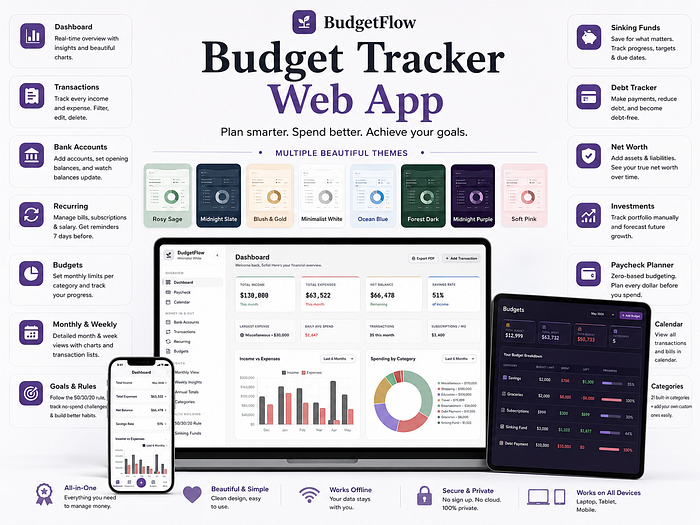
A complete offline budget planner covers everything a subscription app does. Transaction tracking with automatic category filtering. Monthly budget planning with real-time actual vs budget charts. Recurring bills with 7-day reminders. Debt tracker with snowball and avalanche payoff calculations. Sinking funds for planned future expenses. Investment portfolio tracker. Net worth calculator. 50/30/20 dashboard. Financial calendar. Weekly spending insights. Annual totals. No-spend challenge tracker.
All of it automated. All of it offline. All of it in one file that opens in Chrome, Safari, Firefox, or Edge on any device — desktop, laptop, iPhone, Android.
The data never leaves your device. There is no company holding your financial history hostage behind a paywall.
That is what ownership looks like in a budgeting tool.
The Real Cost Comparison
YNAB costs $14.99 per month — $179.88 per year. Over five years that is $899.40 to access your own budgeting data.
A one-time purchase offline budget planner costs a fraction of that. Once. With no expiry date.
The feature difference between the two is negligible for most users. The ownership difference is everything.
The Part Nobody Talks About
Consistency matters more than which tool you use.
The best budgeting app is the one you actually open every day. And there is something psychologically different about opening a tool you own outright versus one you are renting month to month.
Ownership creates commitment. When you pay once for something you keep it, use it, and make it work. When you pay monthly for something you constantly re-evaluate whether it is worth it.
That re-evaluation is mental overhead that has nothing to do with your actual finances — and it is completely eliminated the moment you switch to a tool you own permanently.
Where to Go From Here
If you are currently on YNAB and genuinely love the zero-based methodology — stay. A tool that works for you is always the right tool regardless of cost.
But if you are on the fence, if you have been meaning to cancel, if the monthly charge quietly bothers you every time it hits — the offline alternative is worth looking at.
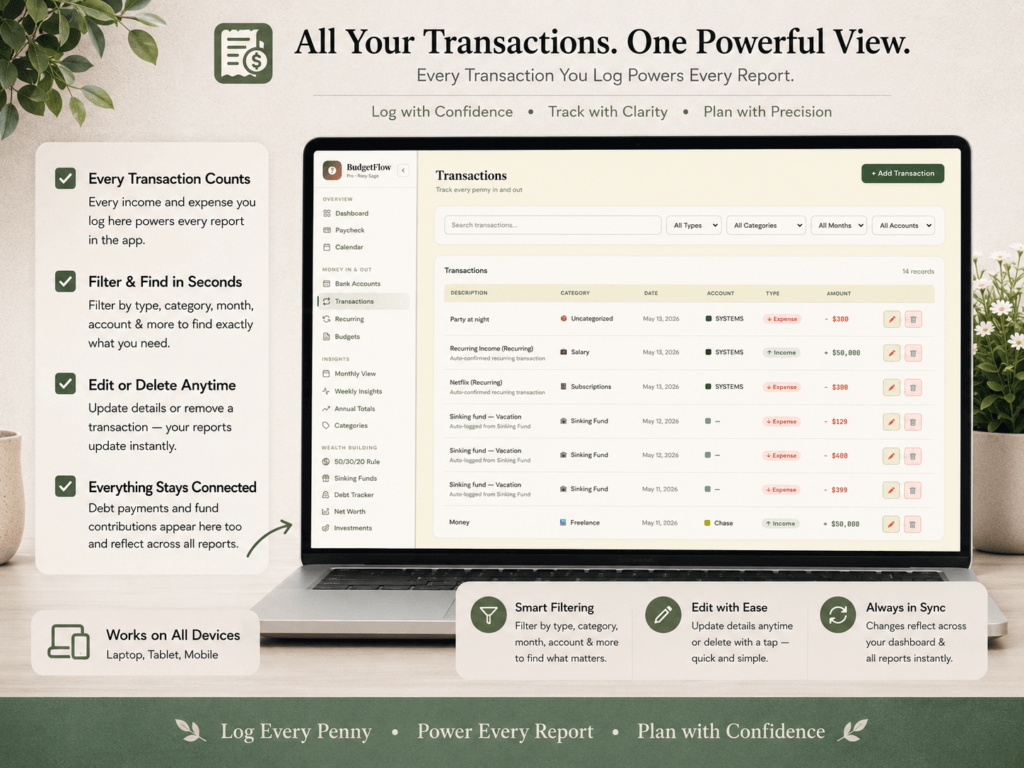
BudgetFlow Pro is the one I would point people toward — eight visual themes, every feature you would expect from a premium finance app, completely offline, one-time purchase.
https://enigmaeasel.com/product/all-in-one-budget-planner-web-app/
The irony of paying monthly to manage money you are trying to save should only bother you for so long before you do something about it.